

Barrel ageing
Barrel ageing
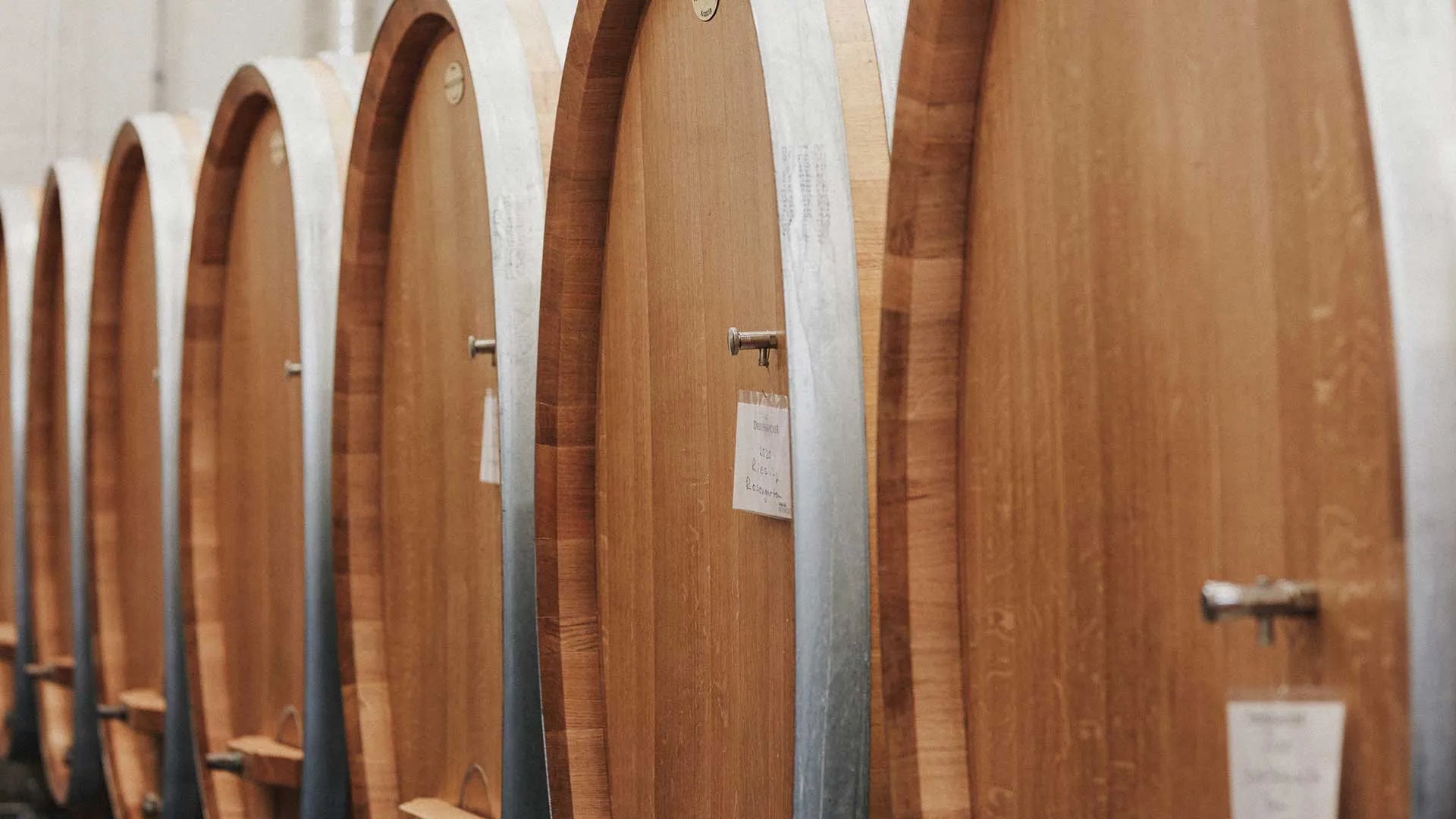
Barrel ageing is a complex and valuable step on the way to singular wines. It is how we give our wines more depth and structure. Several factors influence how a wine matures in wood. Wood is a natural material and therefore not entirely impermeable to outside influence, which leads to two processes. The first is the ingress of air, a micro-oxidation, by which small amounts of oxygen reach the wine through the wood. The second is that minute amounts of the cask's contents evaporate continuously through the wood.
Besides air ingress and evaporation, the wood itself affects the taste. Over time it gives the wine a characteristic fine wood flavour and toasted notes. How pronounced these become depends on how long the wine lies in the cask, how heavily the cask was toasted, how large it is and whether it is being used for the first time or has been filled before.
The longer a wine matures in wood, the more wood and toast notes it takes on. These come from the fact that casks are fired on the inside to bend the staves; at the winemaker's request the firing can be intensified, which increases the intensity of the toasted notes in the wine. This firing process is called toasting. The flamed inner surfaces then pass a fine toasted aroma into the wine.
Cask size also affects the intensity of the aromas. The larger the cask, the smaller the proportion of wine in contact with the wood surface, so the exchange of aromas takes longer or comes out milder than in a smaller cask. When a cask is filled with wine for the first time the exchange between wood and wine is at its most intense; on a second or third filling it is noticeably milder.
Barrel ageing combined with ageing in stainless steel is what gives our wines their depth, complexity and independence. With barrel-aged Riesling in particular, the wood and toast notes meet a wine that can be angular and give it an equal counterpart.
Tonneau Keller
Tonneau Keller
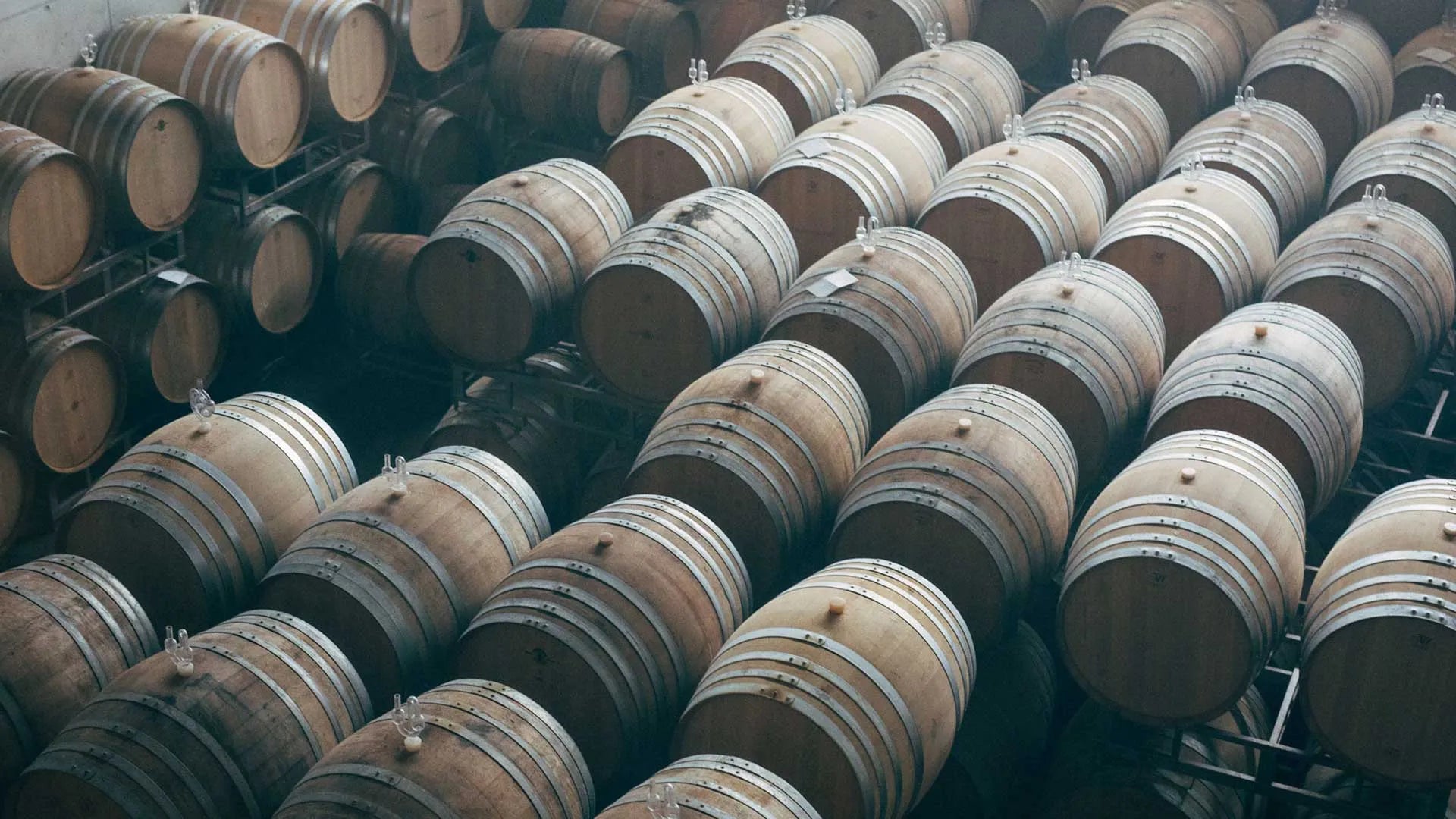
In the Dreissigacker tonneau cellar we age our Pinot wines: Pinot Blanc, Pinot Gris and Chardonnay. Barrel-aged white wine impresses with its particular structure. For barrel ageing we use 500-litre tonneaux with toasted staves, the lengthwise timbers of a cask. Ageing white wine in wood, here in the tonneau, has a long tradition, since almost all wines were once aged in barrel. We see that the wood does these wines good, so we age white wine in barrel as well. With more complex whites in particular, the notes of wood and toast lift the taste noticeably. Barrel ageing gives us one more way to make distinctive and innovative white wines. At Dreissigacker we judge for each wine exactly how much wood and toast it needs, and what the upper limit is. That judgement rests on our experience, our patience and an instinct for the new.
Barrique Keller
Barrique Keller
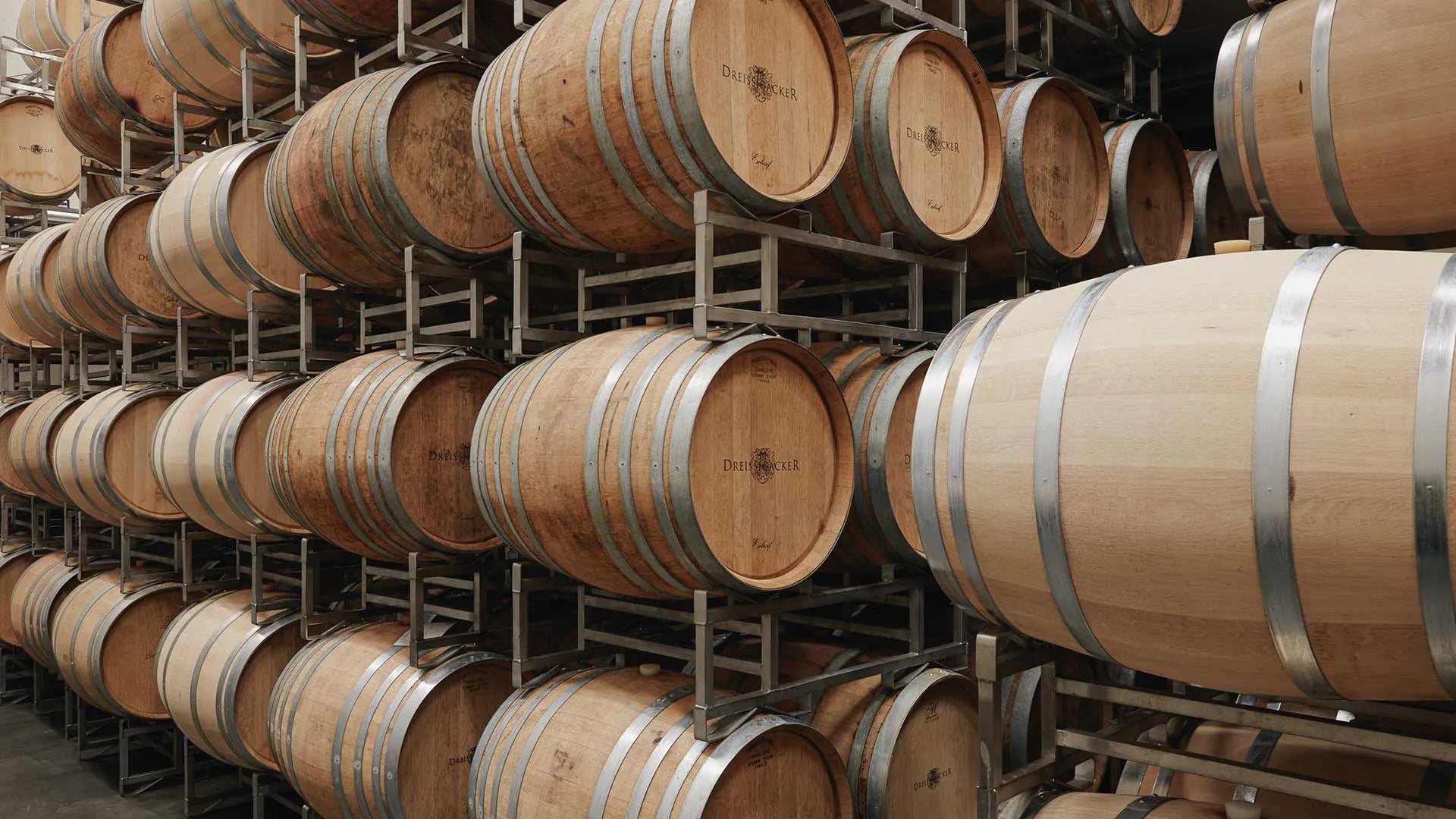
The barrique cellar is where our barrel-aged red wines rest. Barriques are comparatively small oak casks holding 228 litres each. We use them to age our red wines, Pinot Noir and St. Laurent. Because the cask is small, barrique ageing has a strong influence on the wine, which can interact with the wood particularly well. Our red wines rest here for at least two years, in some cases three or four, depending on how the notes of wood and toast develop. Pinot Noir in particular needs a long time to mature. We give it that time, because it pays off in the glass.
Stainless steel cellar
Stainless steel cellar
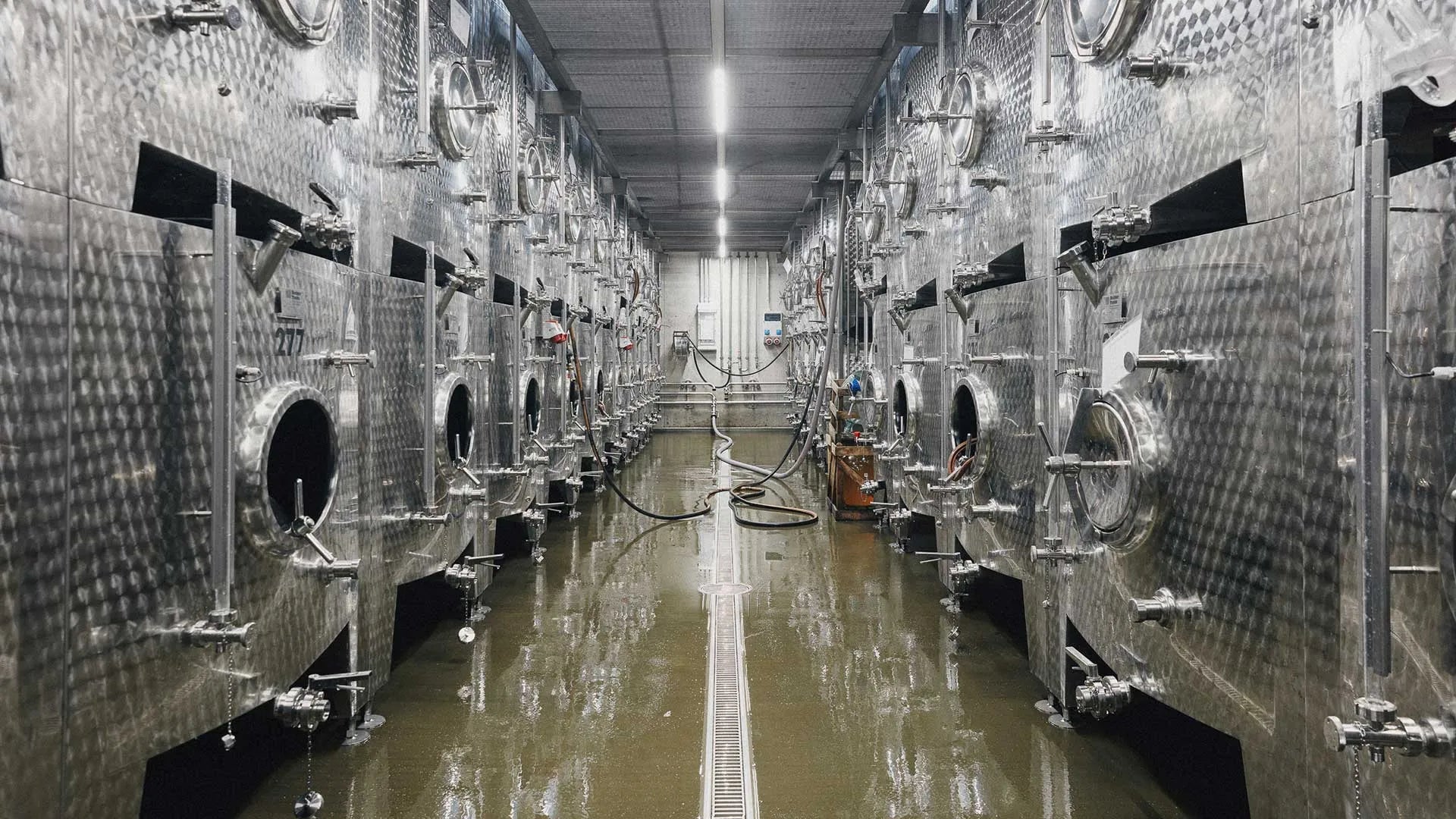
Set against the barrique cellar, the stainless steel cellar seems at first to lack the classic cellar atmosphere. But ageing in stainless steel lets the winemaker work in very small lots and with great attention to detail. Barrel and steel each bring their own qualities. Which one a wine goes into depends on which characteristics are to be emphasised. In stainless steel the wine matures without outside influence and develops its own aroma. Its flavour can come only from the wine itself, and therefore from the grapes. Steel makes for very precise ageing and brings out a brilliant aroma during maturation. It is particularly suited to keeping freshness in the wines in warm years. Tank temperature can also be set exactly, which adds further precision. The winemaker stays in control throughout maturation and can focus entirely on the wine. At Dreissigacker we work mainly with smaller tanks, because we age in small lots and want to bring out every fine nuance.

